

Don Chapman
Composer/arranger Don Chapman has created HYMNDEX as a labor of love to help new generations learn about the lives, legacies and lyrics of historic hymn writers.
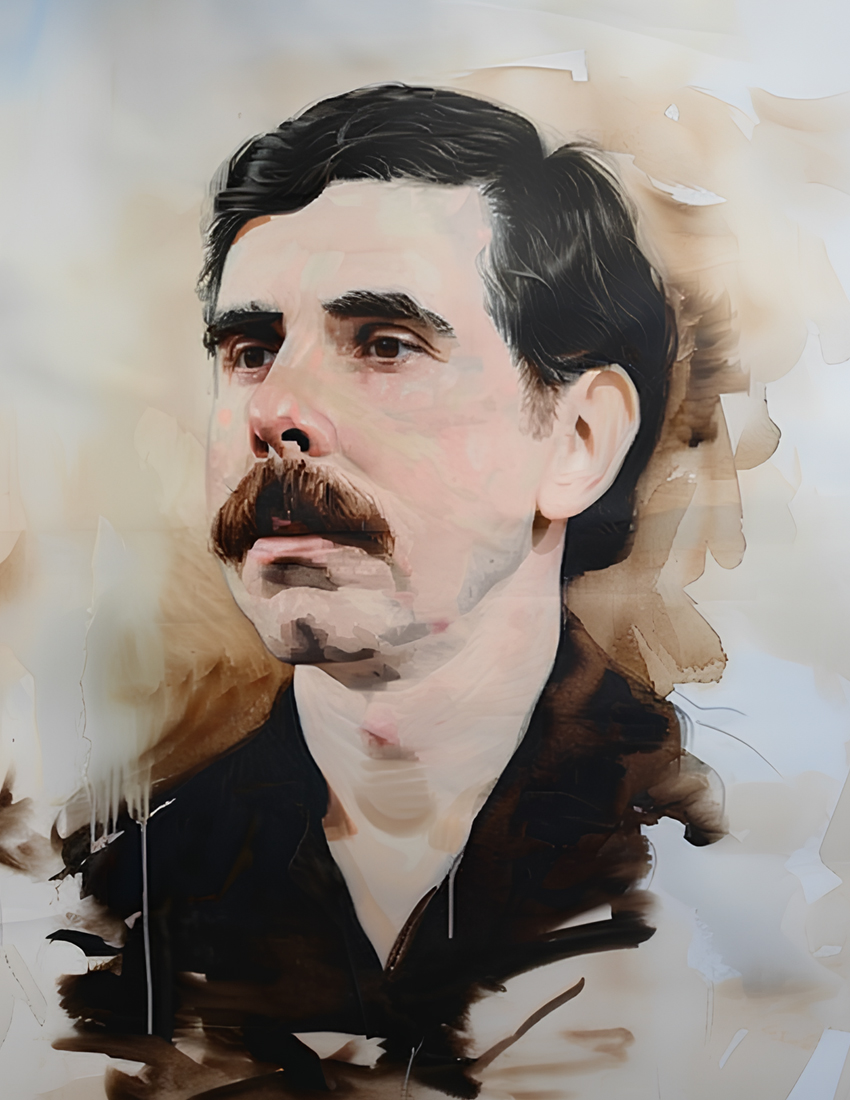
Full name: Joseph Medlicott Scriven
Born: September 10, 1819
Birthplace: Ballymoney Lodge near Banbridge, County Down, Ireland
Died: August 10, 1886, Port Hope, Ontario, Canada.
Place of death: Bewdley near Port Hope, Ontario, Canada
Occupations: Teacher, preacher, hymn writer
Religious association: Plymouth Brethren
Best-known hymn: “What a Friend We Have in Jesus”
Published collection: Hymns and Other Verses (1869)
A note from editor Don Chapman:
I like to include a real photograph of the hymn writer if I can find any, then clean it up and/or colorize it with AI-powered editing tools to bring these people to life. If I can’t find a photo (or if the hymn writer is from a time before photography) then I’ll create one with graphics software.
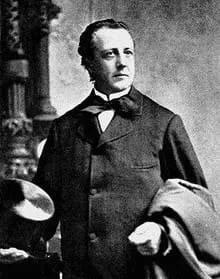
In the case of Joseph Scriven, many websites and sources mistakenly use an image of composer Charles Converse:
After some dedicated searching, I managed to uncover a single, grainy photo of Scriven:
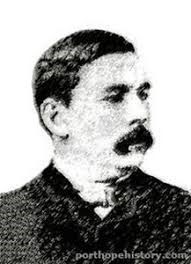
You’d think someone who had written a hymn of the magnitude of What a Friend We Have in Jesus would have at least a single decent picture but apparently not! To do this man justice I created an artistic interpretation you see at the top of the page.
It’s all about putting a face to the names we sing every Sunday, and remembering that these people weren’t just some dusty old relics, but real people with real stories, real struggles, and a real heart for God.
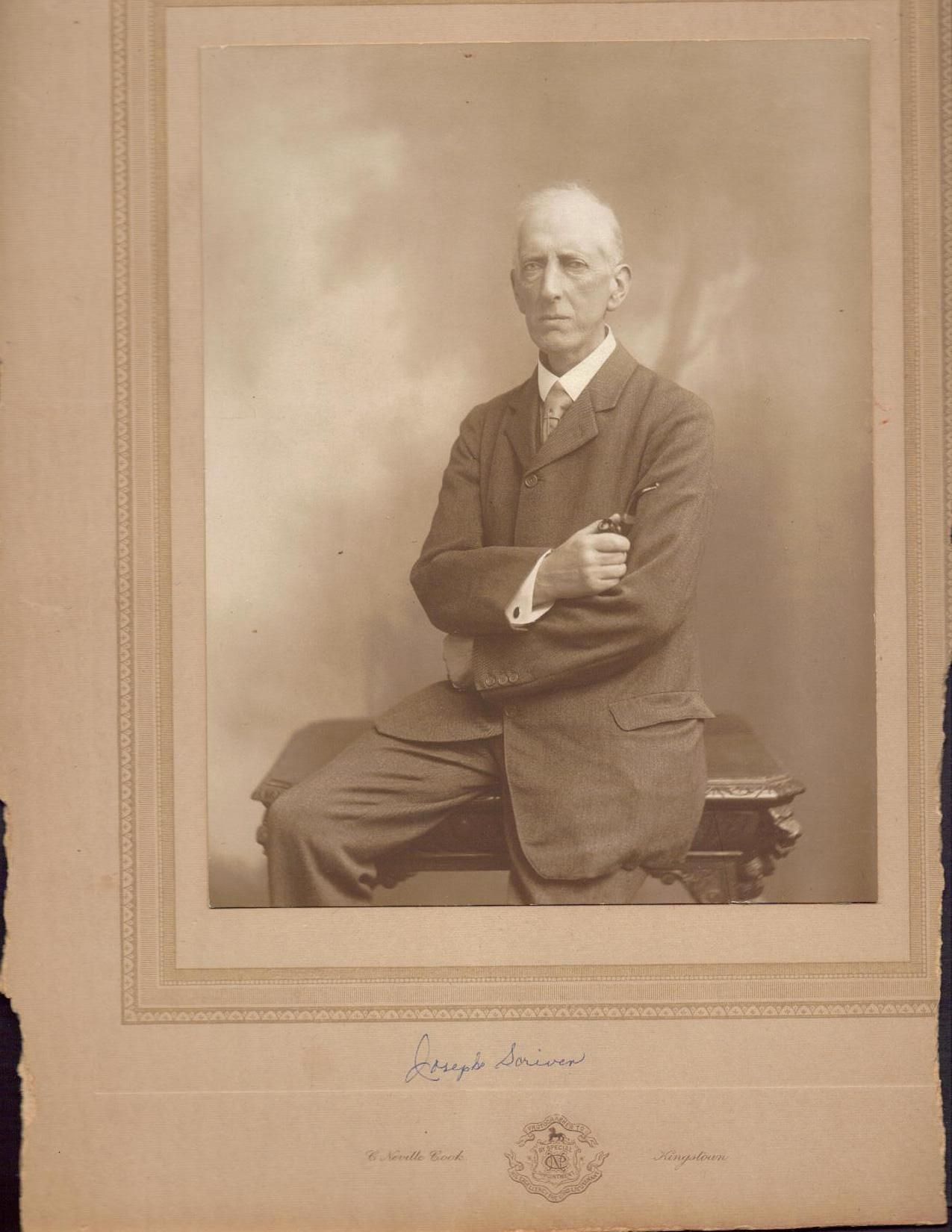
Update: I discovered an apparant photo of an elderly Scriven on a genealogy website:
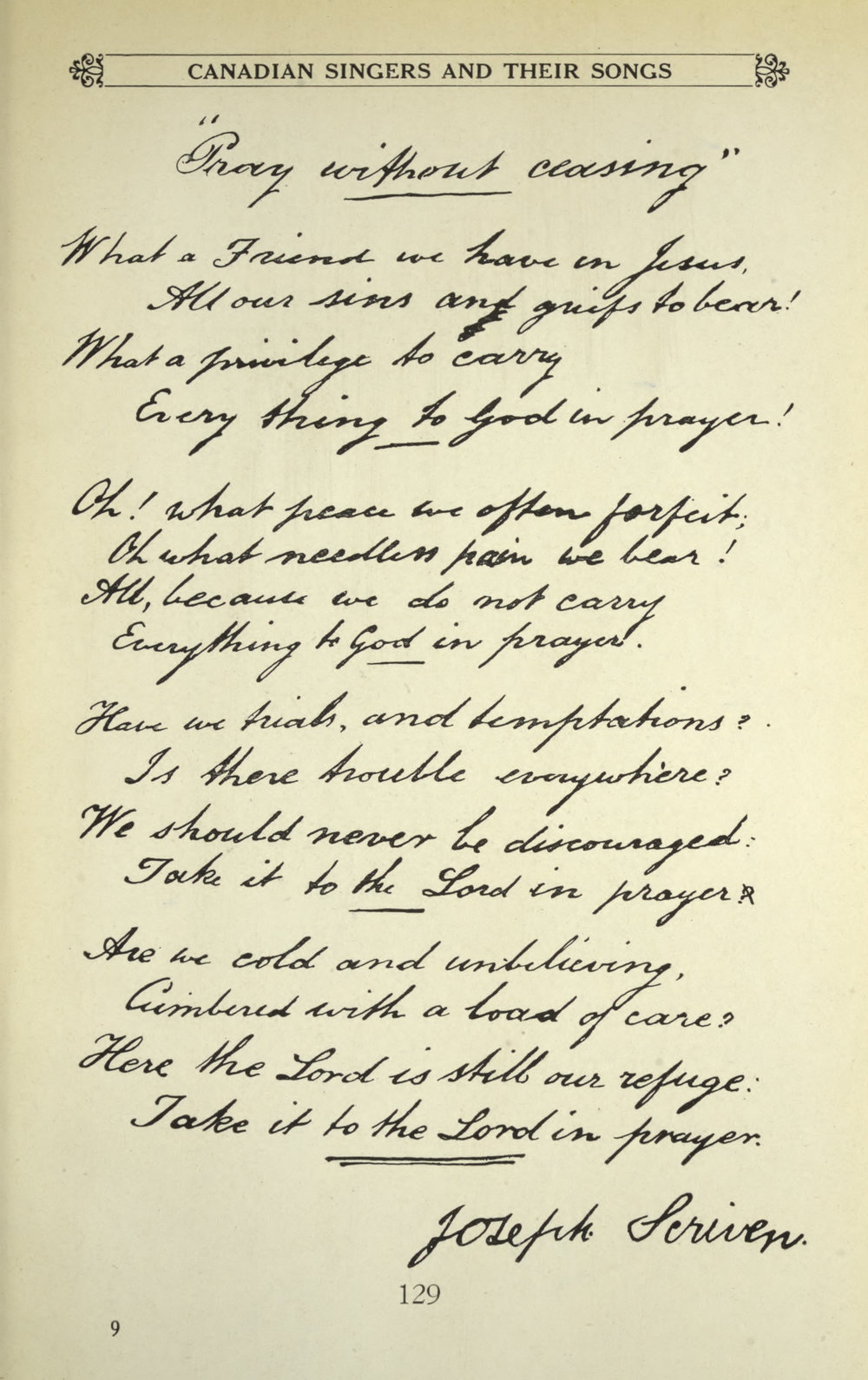
The story of how Joseph Scriven’s loved hymn, “What a Friend We Have in Jesus,” spread from a small circle of handwritten copies into hymnals across many Christian traditions is proof of the power of its simple yet profound message.
In 1919, editor Edward S. Caswell reported that Mrs. A. M. Tremaine of Toronto allowed him to examine a small paper-bound manuscript book containing ten pages of poems written in Scriven’s own hand. Scriven had given the book to Mrs. Tremaine’s father, John Charles Benett of Brantford, in the early 1850s. Scriven was then living in Brantford, where he conducted a private school attended by Mrs. Tremaine during her childhood.
On the inside of the book’s back cover, Scriven had written what Caswell believed to be the original draft of his famous hymn. Modern hymnological research describes it more cautiously as an early manuscript version of “What a Friend We Have in Jesus”, since Scriven distributed several handwritten copies and the present locations of the original manuscripts are unknown.
Headed “Pray Without Ceasing,” a phrase taken from 1 Thessalonians 5:17, the manuscript contains only sixteen lines rather than the twenty-four lines of the familiar three-stanza hymn. It includes several notable differences, such as “Are we cold and unbelieving” and “Here the Lord is still our refuge.” The shorter form and altered wording suggest that the manuscript preserves an early stage in the hymn’s development.
The manuscript book’s early-1850s provenance is consistent with, but does not prove, the later tradition that Scriven sent another copy to Dublin to comfort his mother after his father, John Scriven, died on December 21, 1850. No surviving letter from Scriven has yet been identified that establishes the precise occasion on which the hymn was written or sent.
In a letter dated January 8, 1887, to Methodist hymnologists Charles Nutter and Wilbur Tillett, James Sackville stated that Scriven had never published the hymn himself in a book or newspaper. According to Sackville, Scriven sent one manuscript copy to his own mother and gave another to Sackville’s mother “about the year 1855.” Sackville also wrote that, until shortly before Scriven’s death, even many of his intimate friends did not know that he had written the hymn.
Sackville’s testimony is important, although modern researchers believe his date of approximately 1855 may be slightly early, since Scriven apparently did not come into contact with the Sackville family until around 1857. An 1895 biographical sketch similarly reported that Scriven made two copies while staying near Rice Lake, sending one to his mother in Dublin and giving the other to Mrs. Sackville.
Although no evidence has been found that Scriven personally arranged the hymn’s publication, its first presently confirmed printed appearance was anonymous, in H. L. Hastings’s Social Hymns Original and Selected in 1865. Charles Crozat Converse’s familiar CONVERSE tune followed in 1870. The hymn reached a much wider audience after Ira Sankey and P. P. Bliss included it in Gospel Hymns and Sacred Songs in 1875, although the words were initially misattributed to Scottish hymn writer Horatius Bonar. Scriven was finally credited in Gospel Hymns No. 5 in 1887, the year after his death.
Joseph Medlicott Scriven (1819–1886) was an Irish-born teacher, preacher, and hymn writer who spent much of his adult life in Ontario, Canada. He is remembered chiefly as the author of the words later published as “What a Friend We Have in Jesus.” This documented biography examines Scriven’s life, the surviving early manuscript of his famous hymn, the stories that can (and cannot) be verified, and the enduring musical power of his best-known text.
“Are you the author of this lovely poem?” A dying man in a farmhouse near Rice Lake, Ontario, gave the question a curious answer: “The Lord and I did it together.” The poem lying at his bedside was “What a Friend We Have in Jesus,” and the man was Joseph Scriven, a man whose life held enough grief for ten men, yet who never stopped pointing others to the Friend who shared it all.
Joseph Medlicott Scriven was born on September 10, 1819, at Ballymoney Lodge near Banbridge, County Down, Ireland, into an Anglican family. His father, Captain John Scriven, had served in the Royal Marines and later served as a churchwarden at Seapatrick Parish Church; his mother was Jane Medlicott.
At sixteen, Scriven entered Trinity College Dublin in 1835. He left after two years to enter Addiscombe Military College, which trained young men as cadets for the East India Company. After two years at Addiscombe, Scriven resigned. The surviving official explanation states that his health rendered him unfit for service in a tropical climate. No surviving evidence establishes that conscience, rather than health, prompted his resignation.
Returning to Trinity College, Scriven earned his Bachelor of Arts degree in 1842 and afterward worked as a tutor for families around Ireland. Later accounts say that he fell in love with a young woman from Banbridge whose name has been lost to history. They planned to marry in the summer of 1843, but she reportedly drowned in the River Bann shortly before their wedding.
No surviving contemporary account of the drowning has been found, so its precise date, location, and circumstances cannot be established. Familiar details—including stories that she was thrown from a horse, that Scriven witnessed the accident from the opposite bank, or that it happened during a storm—come from later retellings rather than surviving records from 1843.
A later Banbridge history says that the loss left Scriven “morose” and rarely seen to smile, although this description is retrospective rather than a contemporary observation. Around this period, he became involved with a separatist Christian fellowship in Dublin associated with the movement later known as the Plymouth Brethren. Originating in Dublin, the movement sought a simpler form of church life modeled on the New Testament, with an emphasis on Bible study, lay participation, Christian fellowship, and the breaking of bread.
Later local accounts say that Scriven’s association with the Brethren contributed to an estrangement from his Anglican family. One frequently repeated story relates that his mother bought him an expensive coat for the Canadian winter, only to learn that he had given it to a beggar in Dublin, explaining that the man needed it more than he did.
Although the details of that particular incident come from later tradition, an early biographical sketch published in 1895 independently reports that Scriven sometimes gave away his own clothing to relieve the suffering of destitute people. The coat story is therefore best understood as an illustration of the radical generosity for which he became known, rather than as a documented political statement.
According to a Banbridge bicentenary history, Scriven sailed for Canada on May 9, 1845, aboard a ship named Perseverance. He traveled to Woodstock, near Hamilton, where he stayed with a Brethren family he had known in Dublin. After becoming ill and not wishing to burden his hosts, he sold his possessions and returned to Ireland.
Back in Ireland, Scriven worked as a tutor to the son of Dr. Bartley, surgeon to the First Royal Dragoons. A later local history says that he accompanied the family on a tour of the Middle East and was deeply affected by visiting Damascus. There he reportedly walked along the Street Called Straight, where the book of Acts says Ananias was sent to find Saul following Saul’s encounter with Christ on the road to Damascus.
The same later account relates that Scriven subsequently moved to Plymouth, England, where he became close to a woman identified only as Miss Falconer. When she chose another man, Scriven reportedly stepped aside and remained a friend to the couple. The three later moved to Canada, and Scriven is said to have helped care for Falconer’s husband after the man became mentally ill. These details survive in retrospective local histories but have not been confirmed by a known contemporary record.
During his years in Canada, Scriven composed the words that eventually became one of Christianity’s most beloved hymns, “What a Friend We Have in Jesus.” The familiar story says that he wrote the poem to comfort his mother in Ireland during a time of sorrow. That tradition is plausible, but the exact date, location, and circumstances of the hymn’s composition cannot be established with certainty.
An early manuscript associated with Scriven’s years in Brantford during the early 1850s contains only sixteen lines, rather than the twenty-four lines of the familiar three-stanza hymn. Headed “Pray Without Ceasing,” this shorter manuscript suggests that Scriven’s text developed in stages. It also indicates that an initial version may predate his later association with the Sackville family near Rice Lake.
According to James Cleland’s 1895 biographical sketch of Scriven, Scriven made two copies of the hymn while residing at the home of his friend James Sackville near Rice Lake. He sent one copy to his mother in Dublin and gave the other to Mrs. Sackville, who reportedly still treasured it late in life. Cleland suggested that Scriven’s mother may have helped bring the hymn to public attention.
That part of the hymn’s history remains uncertain. No early Dublin printing has been identified, and the first presently confirmed publication appeared anonymously in H. L. Hastings’s Social Hymns Original and Selected in 1865. The familiar CONVERSE tune by Charles Crozat Converse was first published with the text in 1870.
In a recollection published in 1906, gospel musician Ira Sankey related that a neighbor discovered a manuscript of the hymn near Scriven’s bedside and asked whether he had written it. Sankey reported that when another neighbor later asked the same question, Scriven answered, “The Lord and I did it between us.” Because Sankey recorded the story approximately twenty years after Scriven’s death, it is best understood as a later recollection rather than a verbatim contemporary transcript.
This beautiful explanation of the hymn’s origin reveals a profound truth about the Christian life. Too often, we try to navigate life’s challenges on our own, bearing needless pain and succumbing to self-pity when things go wrong. Scriven’s words remind us that we are never alone and that true strength and comfort can be found in partnership with God.
Scriven found love again with Eliza Catherine Roche, whose surname is also rendered “Roach” in Canadian reference works. She was a niece of the Pengelly family, whose children Scriven tutored, and the couple became engaged.
A later Banbridge history relates that Eliza embraced the teachings of the Plymouth Brethren and underwent immersion baptism in the cold waters of Rice Lake. That account connects the exposure to a chill that developed into pneumonia and gives her date of death as August 6, 1860. Canadian scholarly sources confirm that she became ill and died in August 1860, but the direct claim that the baptism caused her fatal illness cannot be independently established.
This second loss deeply affected Scriven, and his mission to help others took on new fervor. He devoted his life to assisting people who were too poor or sick to pay for help. An early account records that he gave away clothing, ministered to people suffering from illness, and operated a dairy for more than twenty years to support a destitute widow. Later accounts remember him especially as “the man who saws wood for poor widows and sick people unable to pay.”
Scriven’s street preaching sometimes brought him into conflict with residents and local authorities. A later Banbridge history records stories of people beating him, jeering at him, and throwing mud while he preached. Although the dramatic details come from later retellings, surviving newspaper material confirms that his public preaching was not always welcomed.
On September 2, 1880, the Weekly Port Hope Times referred to “a man named Scribbins” (apparently Scriven) who had been preaching near Ontario and Walton Streets, “yelling and shouting like a good fellow occasionally.” The newspaper called him “a nuisance” and appealed to the authorities to remove him.
It is tempting to connect Scriven’s experiences of rejection and mistreatment with the poignant words of the hymn’s third stanza. However, no surviving manuscript or contemporary statement proves that a particular incident inspired these lines:
Do thy friends despise, forsake thee?
Take it to the Lord in prayer!
In His arms He’ll take and shield thee,
Thou wilt find a solace there.
These words serve as a powerful reminder that when we face rejection, loneliness, or hardship, we can always turn to Jesus in prayer. He is the friend who will never abandon us, the one who will provide comfort, protection, and peace in our darkest hours.
By the age of sixty-six, after a physically demanding life of service, Scriven’s health was failing. His 1895 biographer wrote that Scriven had become deeply despondent and feared becoming a burden on his friends. His longtime friend James Sackville brought him to the Sackville home near Rice Lake so that he could be cared for.
On the night before Scriven’s body was found on August 10, 1886, Sackville left him in his room at about midnight and remained awake in an adjoining room. At approximately five o’clock in the morning, Sackville discovered that Scriven’s room was empty. A search was undertaken, and shortly after noon his body was found in nearby water.
Sackville’s account does not claim to know what happened after Scriven left the house. The Dictionary of Canadian Biography identifies the location as the spillway of Sackville’s gristmill, only a short distance from a spring.
One possibility is that Scriven left the house to obtain water or relief from the heat, became faint or disoriented, and accidentally fell into the millrace. This explanation is consistent with the location of the spring and Scriven’s weakened physical condition, but it cannot be proved.
Others have wondered whether Scriven deliberately ended his life. Sackville wrote that, a few days before his death, the exhausted and despondent Scriven had said, “I wish the Lord would take me home.” That statement reveals his suffering, but it does not establish what occurred on the final night of his life.
The historical record does not resolve whether Scriven’s drowning was accidental or intentional. His faith cannot by itself prove that the death was accidental, just as his despondency cannot prove that it was deliberate. James Sackville himself concluded that a “veil of mystery” remained over his friend’s final hours.
While we may never know the true circumstances surrounding Joseph Scriven’s death, one thing is certain: his life was marked by faith, compassion, and extraordinary generosity. Even in his darkest times, he sought hope in his relationship with God and devoted himself to helping people in need.
Scriven was buried in the Pengelly family burial ground, originally in an unmarked grave between Eliza and Commander Robert Lamport Pengelly. A monument was later erected over the site. A later local tradition adds that Scriven and Eliza were buried “with feet near feet, so that one day when they would rise from the grave they would face each other.” That moving description should be understood as a cherished tradition rather than a detail established by a surviving burial record.
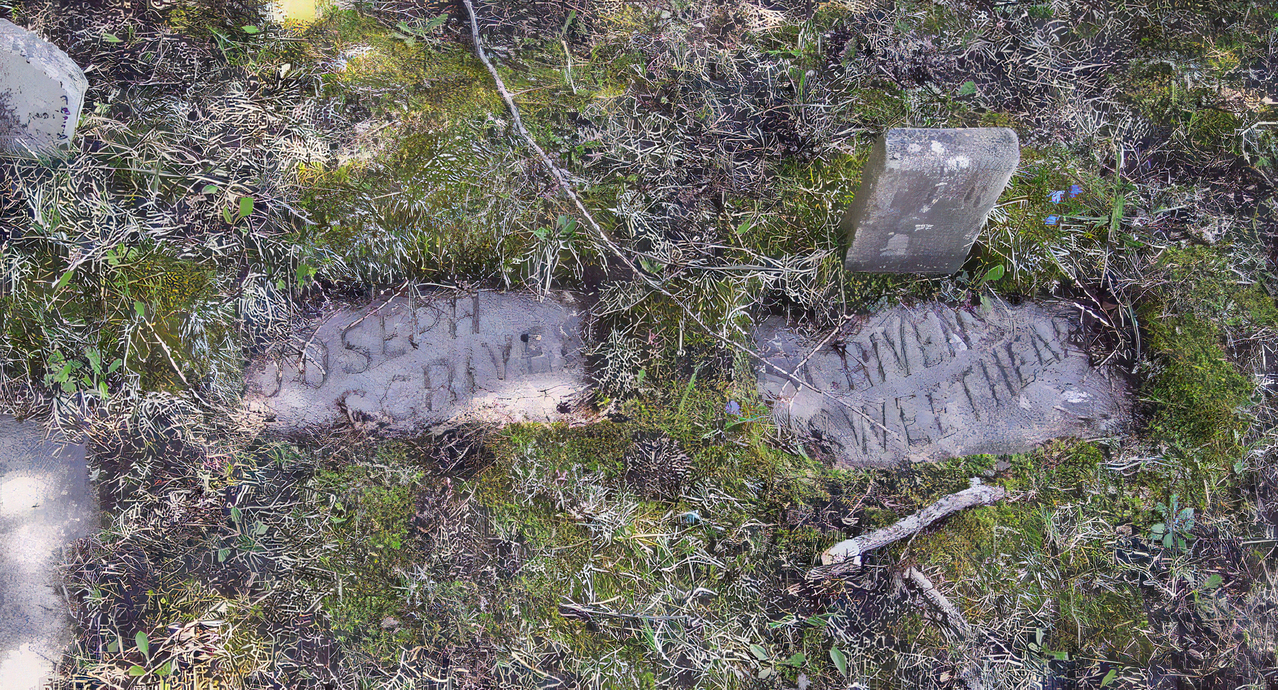
Despite the tragic end to his life, Joseph M. Scriven’s legacy lives on through his hymn, “What a Friend We Have in Jesus.” The poem, which he wrote to comfort his ailing mother, has become a source of solace and inspiration for millions of Christians around the world. Its message of finding friendship and comfort in Jesus during times of trial and sorrow resonates with people of all ages and backgrounds.
Can we find a friend so faithful,
Who will all our sorrows share?
Jesus knows our every weakness;
Take it to the Lord in prayer.
Scriven’s life, marked by love, loss, and an unwavering commitment to his faith and compassion for others, serves as a testament to the power of perseverance in the face of adversity. His story reminds us that even in our darkest moments, we can find hope and strength in the love of Christ.
As we sing the words penned by Joseph M. Scriven, we are reminded of the eternal friendship we have in Jesus, and the comfort and peace that can be found in turning to Him in prayer. May Scriven’s life and legacy continue to inspire us to live out our faith with compassion, generosity, and a steadfast commitment to serving others, just as he did throughout his remarkable life.
Editor’s note: After writing this article I found newspaper accounts of complaints and of Scriven’s arrest that I found interesting:
from the Guide, Saturday August 9, 1873
On Saturday evening August 2, Constable Johnston arrested Joseph Scriven while the latter, as is his wont, was preaching on the street, and conveyed him to the lock-up. Several young men, fearing he would be kept in confinement during Sunday, went to procure his release, but found that C. Brent, J.P., had already set him at liberty.
Mister Scriven, on Monday morning, appeared before the magistrate who told him to cease preaching on the front streets on Saturdays.
Johnston is generally condemned for making the arrest, particularly as profanity and obscenity on the streets go unchecked.
from the Port Hope Times, Thursday, September 2, 1880 Locals
A man named Scribbins has been, for some time past, in the habit of preaching on Ontario street, near Walton, yelling and shouting like a good fellow, occasionally. This man has become a nuisance and we appeal to the authorities to remove him. If he must preach, let him take up a position in the market-square in the afternoon, where he will not be in the way, and where he will not retard anyone from work which requires to be done in a given time. Mister Scribbins may be doing good, but we fail to see it.
What Can Be Verified About Joseph Scriven’s Life?
Documented: Scriven was born near Banbridge, studied at Trinity College Dublin, trained for a military career, emigrated to Canada, became known for charitable service, wrote hymns and religious verse, and died by drowning in 1886.
Widely repeated but incompletely documented: The exact circumstances and date of his first fiancée’s drowning, the claim that “What a Friend We Have in Jesus” was written specifically to comfort his mother, and some details surrounding his second engagement.
Unresolved: Whether Scriven’s drowning was accidental or intentional.
As someone who has arranged this hymn and played it more times than I can count, I have had plenty of opportunity to sit with the lyrics and ask why it refuses to fade from setlists. The answer, I think lies in its structure.
Every stanza follows the same pattern: it names a human need, then redirects that need toward prayer. Sins and griefs open the first stanza. Trials and temptations open the second. Weakness, heavy burdens, and the sting of being despised and forsaken fill the third. Scriven never lingers on the burden, because the burden is not the point. Each time, the weight is lifted in the same direction: “Take it to the Lord in prayer.” The hymn does not merely describe prayer; it walks the singer through the act of praying, three times over.
Notice how much of the hymn is phrased as a question. “Have we trials and temptations?” “Can we find a friend so faithful?” “Are we weak and heavy laden?” These are not lecture points; they are a personal examination. A congregation singing this hymn is not being told about grief and temptation, they are being asked whether they carry it. Add the exclamations, “What a privilege” and “O what peace we often forfeit,” and the hymn feels less like theology delivered from a pulpit and more like a conversation between the singer and God.
From a practical standpoint, the hymn earns its place in the worship leader’s rotation. The melody is familiar to nearly everyone, churched or not, which makes it a safe choice when visitors fill the pews. The language is personal rather than abstract; there is no doctrine to untangle before the words can be sung honestly. And few hymns are so flexible in use. I have seen it serve as a prayer response, a comfort at funerals, an invitation at the close of a service, and a quiet moment mid-set. A hymn that names our burdens, asks if we carry them, and points us to the One who carries them for us will never lack for occasions.