

Don Chapman
Composer/arranger Don Chapman has created HYMNDEX as a labor of love to help new generations learn about the lives, legacies and lyrics of historic hymn writers.
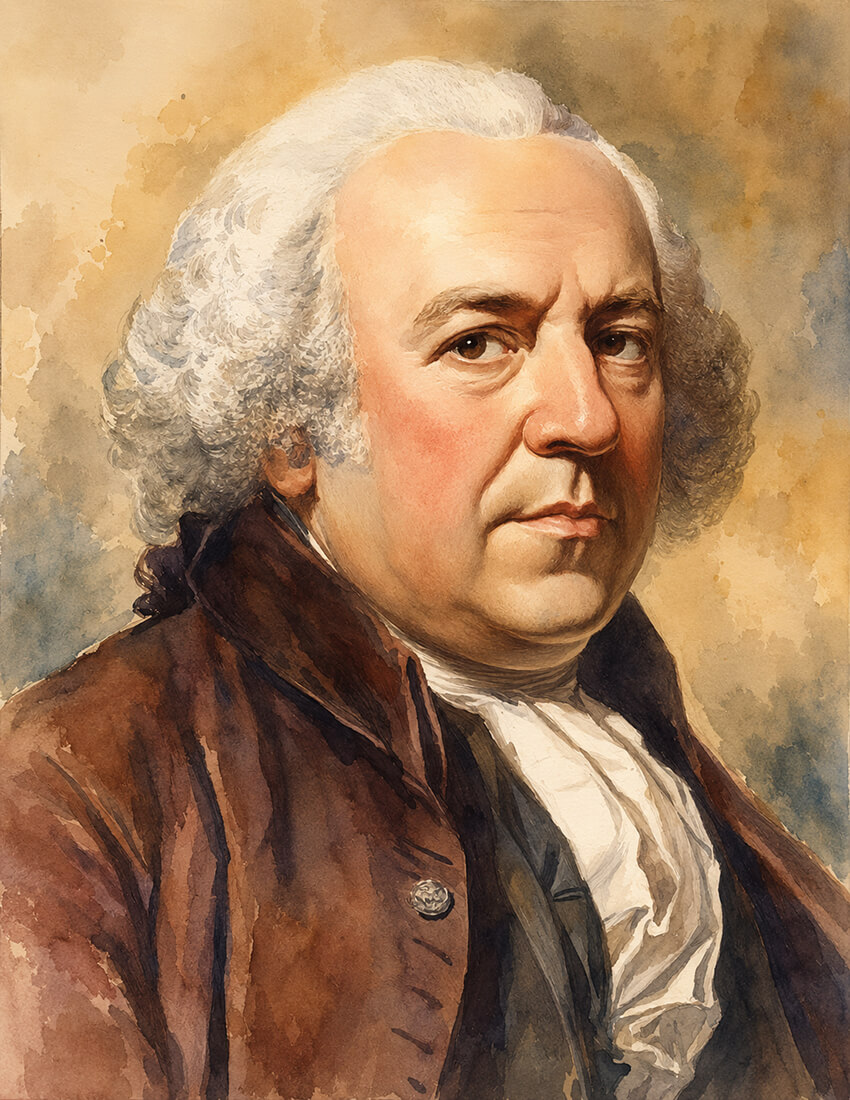
Born: August 4, 1725, Wapping, London, England.
Died: December 21, 1807, London, England.
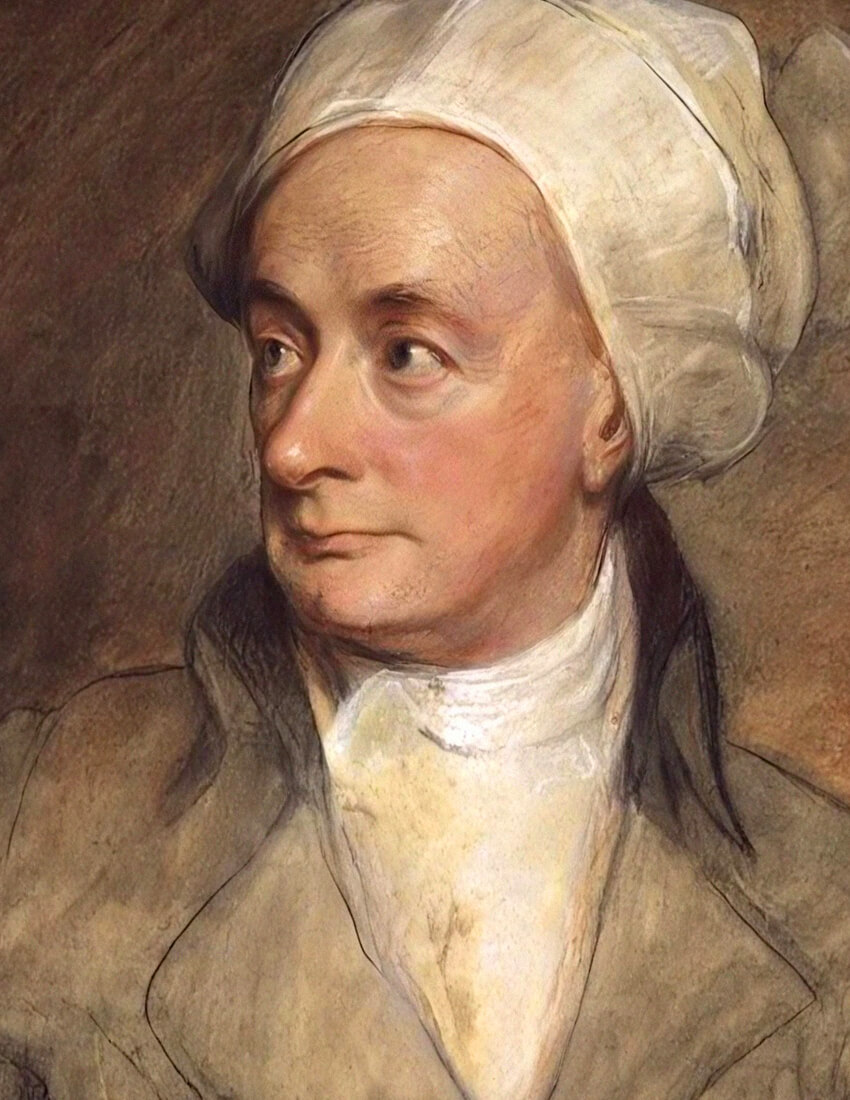
William Cowper was one of the most celebrated English poets of his day, a gifted but deeply troubled man who battled severe depression for much of his life. He found in John Newton a steady friend and pastor at Olney, and the two collaborated on the hymn collection that became Olney Hymns, with Cowper contributing beloved texts such as “God Moves in a Mysterious Way.”
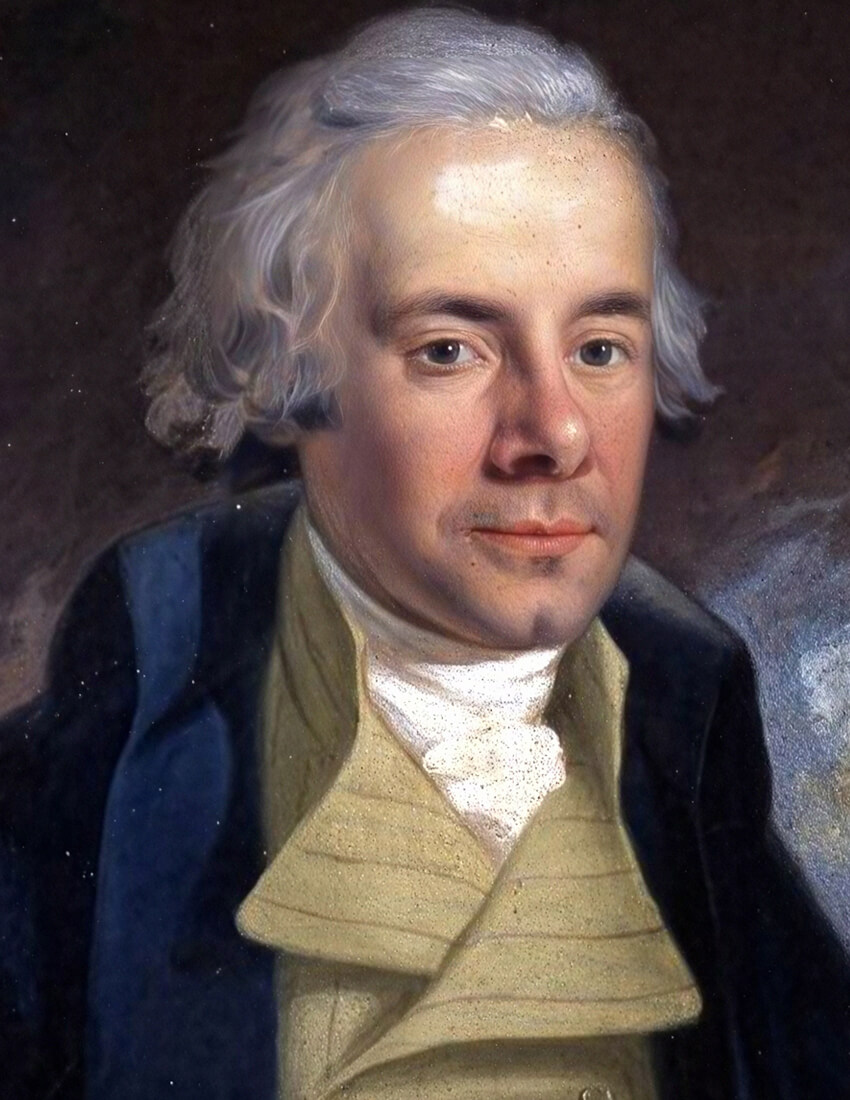
William Wilberforce was a British Member of Parliament who became the leading voice in the long fight to abolish the slave trade. After his religious awakening he sought counsel from John Newton, who urged him to remain in politics and serve God there, advice that helped shape one of history’s great campaigns against slavery.
Download sheet music, chord charts, tracks and multitracks for Amazing Grace at Hymncharts.com or Worshiphymns.com.
We like to believe that some people are simply too far gone. The liar, the deserter, the man whose very trade is human misery; surely there is a point past which grace cannot reach. John Newton spent the first half of his life sinking lower than most men ever dare, and the second half proving that grace has no floor at all. He would call himself, near the end, a great sinner who had met a great Saviour, and perhaps no life in all of hymn history shows that truth so plainly.
John Newton was born in London, 1725. His father was a shipmaster in the Mediterranean trade, often gone at sea, and his earliest and dearest influence was his mother, a devout Dissenter who poured her faith into her only child. She taught young John his Scripture, his catechisms, and his hymns, and she began him in Latin before his seventh year, all in the quiet hope that he would one day stand in a pulpit. He later remembered her as a “pious, experienced Christian.” But she died of consumption shortly before his seventh birthday, and with her went the structure of his young faith. His schooling turned irregular. He left it altogether in his tenth year, and at about eleven he went off to sea with his father. The faith his mother had planted did not vanish, yet it would lie buried for some thirty years before it bloomed.
What followed were years of rebellion. Newton fell into cycles of religious concern broken by stretches of blasphemy and revolt, and a young woman named Mary Catlett, whom he met in 1742, tangled his plans further; his desire to visit her led to delays and reckless decisions that ended with his being pressed into the Royal Navy aboard HMS Harwich. He deserted. He was captured, put in irons, publicly stripped, flogged, and demoted before the whole ship. From there he was handed over to the Guinea trade, and for the next several years he lived in West Africa in conditions he later described as captivity and degradation, calling himself a servant of slaves. The captain’s son who had once recited his catechisms by heart was now a profane and desperate man at the bottom of the world. Lower he could hardly have fallen.
In early 1748, Newton sailed for home aboard the Greyhound. On the tenth of March, a violent Atlantic storm battered the ship so severely that he believed he would drown. In his terror he cried out to the God of his childhood, and the ship held. Newton would mark that date every year for the rest of his life, writing that it was the day “the Lord sent from on high and delivered me out of deep waters.” It is the moment most people imagine when they think of his story: the wicked slave trader, saved in a storm, who walks off the ship a new man and writes a hymn about it.
The truth is harder, and more honest. What did Newton do with his deliverance? Did he renounce the slave trade at once? Did he flee the business he would later shudder to remember? No, he returned to it. For his heart had not yet caught up with his awakening soul. In the years after the storm he served as first mate of the Brownlow, then as captain of the Duke of Argyle and the African, carrying human cargo across the Atlantic and, by his own later admission, holding no settled scruples about the trade. Grace had reached him, but grace was not yet finished with him. It would work slowly, over many years, the way a tide turns a ship long before the men aboard notice the change.
A sudden seizure in 1754, while he was preparing for another voyage, ended Newton’s life at sea for good. He took a customs post in Liverpool as a tide surveyor, a quiet job that left him time to read, to pray, and to write. There the buried seed finally broke the surface. He taught himself Greek and Hebrew, devoured theology, and began to sense the old calling his mother had cherished. Long and humbling was the road from the deck of a slave ship to the pulpit of an English parish, for Newton had no university degree and no respectable pedigree, and the Church of England was in no hurry to ordain a self-taught former sailor. Yet in 1764, after years of rejection, he was ordained and made curate of the little parish of Olney, where he would serve for nearly sixteen years. Preacher, pastoral visitor, teacher of children, leader of prayer meetings; Newton threw himself into the ordinary work of caring for ordinary souls.
Newton found in Olney a gifted and troubled friend, the poet William Cowper, and together the two men set out to write hymns for their congregation. The plan was simple and pastoral: fresh songs in plain language for plain people, hymns that aimed, as Newton put it, at “perspicuity, simplicity and ease.” Cowper’s mind gave way under illness before the work was done, a blow that wounded Newton deeply, but he eventually carried the project forward as a memorial to their friendship. The result, Olney Hymns, was published in 1779. Tucked into its first book was a hymn Newton had written for a New Year service around 1773, drawn from David’s humbled question, “Who am I, O Lord God?” He titled it Faith’s Review and Expectation. The world would come to know it by its opening words instead, but that is a story for another day.
In 1780 Newton became rector of St Mary Woolnoth in London, and there the slow work of grace bore its final, public fruit. The man who had once captained slave ships became one of the most powerful voices against them. In 1788 he published Thoughts upon the African Slave Trade, a confession as much as an argument, declaring that silence on such a subject would be “criminal,” and admitting that he had once been an active instrument in a business at which his heart now shuddered. He lent his testimony to the abolitionist cause and urged a young Member of Parliament named William Wilberforce to remain in public life and serve God there. Little did Newton know in his slave-trading days that he would spend his old age laboring to destroy the very thing that had once defined him. The British Slave Trade Act became law in 1807, only months before he died.
Newton’s body failed him at the end. His sight and hearing went, and he was confined to his room, yet he kept preaching as long as he could speak. Near death, he is reported to have told a visitor that his memory was nearly gone, but that he remembered two things: that he was a great sinner, and that Christ was a great Saviour. He died in London in December 1807, in his eighty-third year. He had written his own epitaph, and it tells his whole life in a single breath: once an infidel and libertine, a servant of slaves in Africa, who was preserved, restored, pardoned, and appointed to preach the very faith he had once labored to destroy. His hymns spread through British worship, but they found their greatest life across the Atlantic, where his New Year hymn would eventually be sung in churches, revivals, and memorials by the millions.
So the next time you are tempted to believe that someone has wandered too far, that some past is too dark or some heart too hard, remember the captain’s son who became a slave trader who became a preacher of grace. Remember that the change did not come all at once, but it surely came. And remember the words that man left the world, the ones he could have written about no one so well as himself:
Amazing grace! how sweet the sound,
That saved a wretch like me!
I once was lost, but now am found,
Was blind, but now I see.