

Don Chapman
Composer/arranger Don Chapman has created HYMNDEX as a labor of love to help new generations learn about the lives, legacies and lyrics of historic hymn writers.
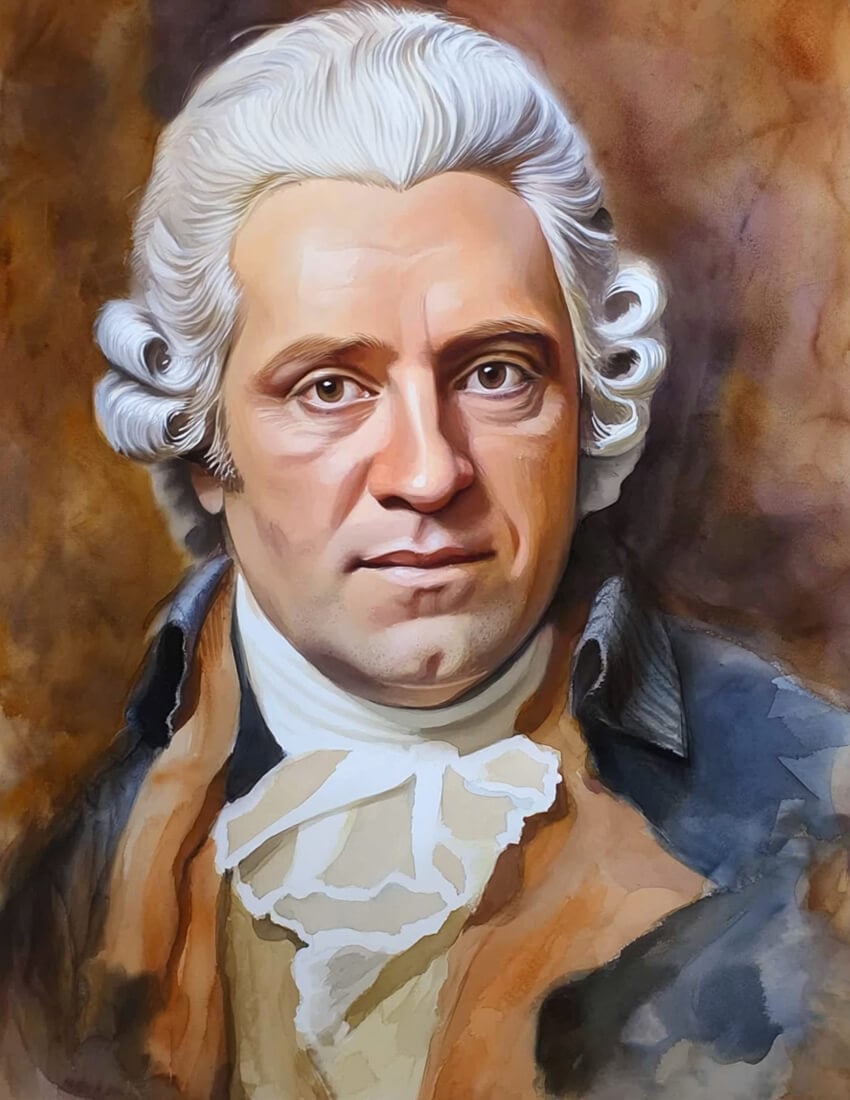
Born: October 30, 1735, Norwich, England.
Died: September 12, 1807, Doncaster, South Yorkshire, England.
Download sheet music and sing this arrangement in your church with a Hymncharts subscription.
There is a certain kind of person who seems to show up wherever history is being made, not because they planned it that way, but because God simply placed them there. Edward Miller was that kind of person. He was not a king, a prime minister, or a world-famous composer. He was a church organist in a modest English town. Yet the list of remarkable figures who passed through his life reads like a page torn from a history book, and the story did not even end with him.
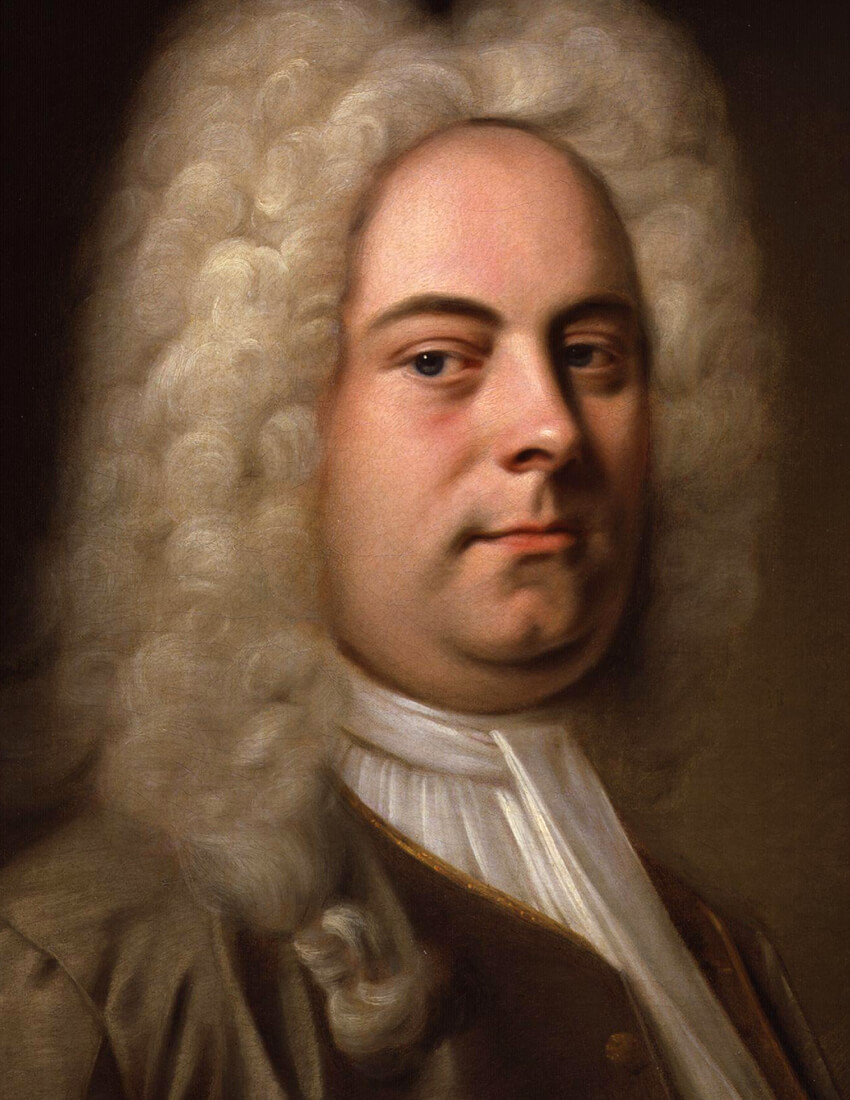
George Frideric Handel: The greatest composer in England, and the man in whose orchestra young Edward Miller once played flute.
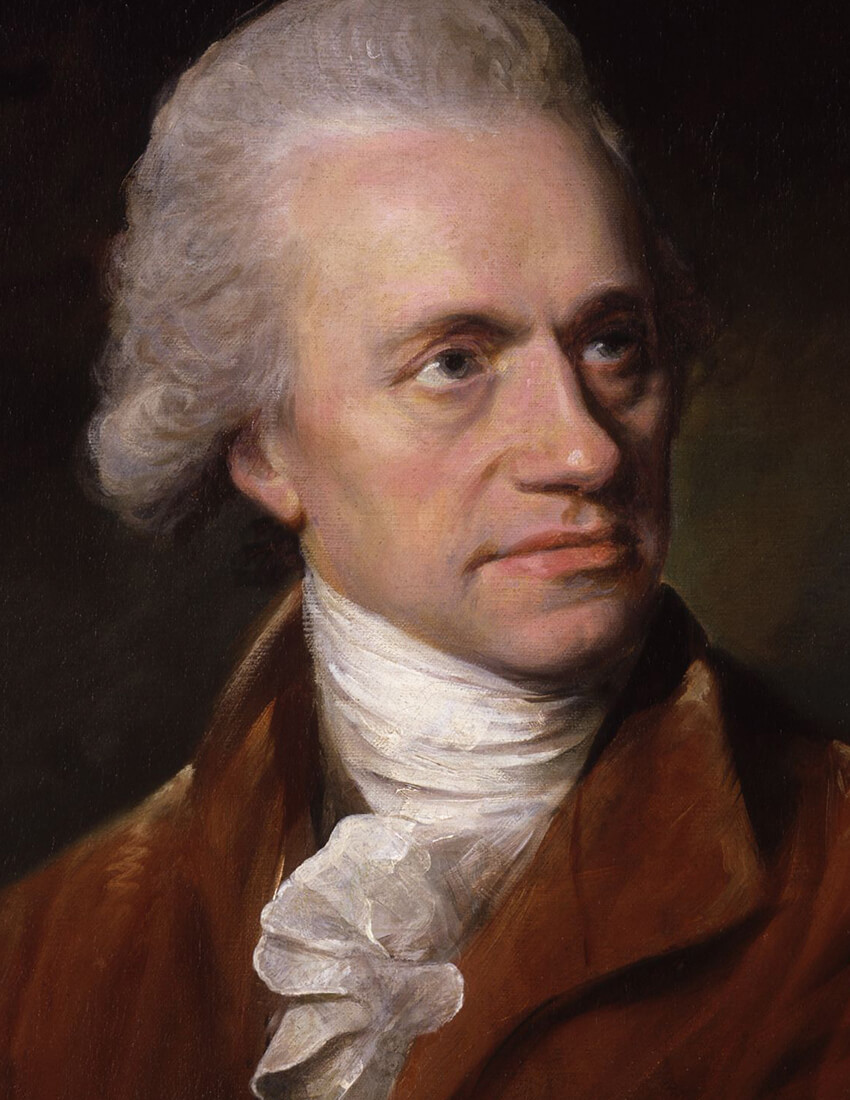
Friedrich Wilhelm Herschel: A musician who once lodged in Miller’s Doncaster home before going on to discover the planet Uranus and receive a knighthood.
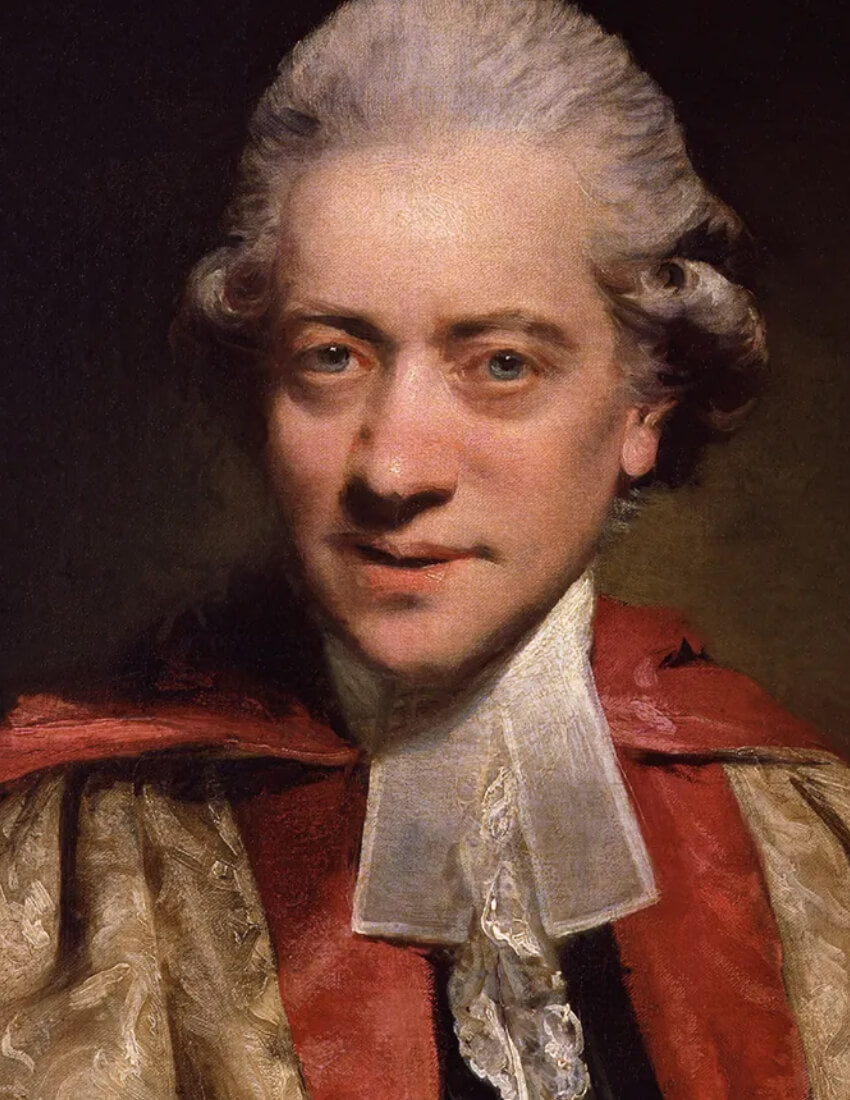
Charles Burney: The most respected music historian of his era, a Fellow of the Royal Society, and a celebrated figure in London’s literary and artistic circles recognized a runaway teenager’s talent and gave Miller his start, setting everything else in motion.
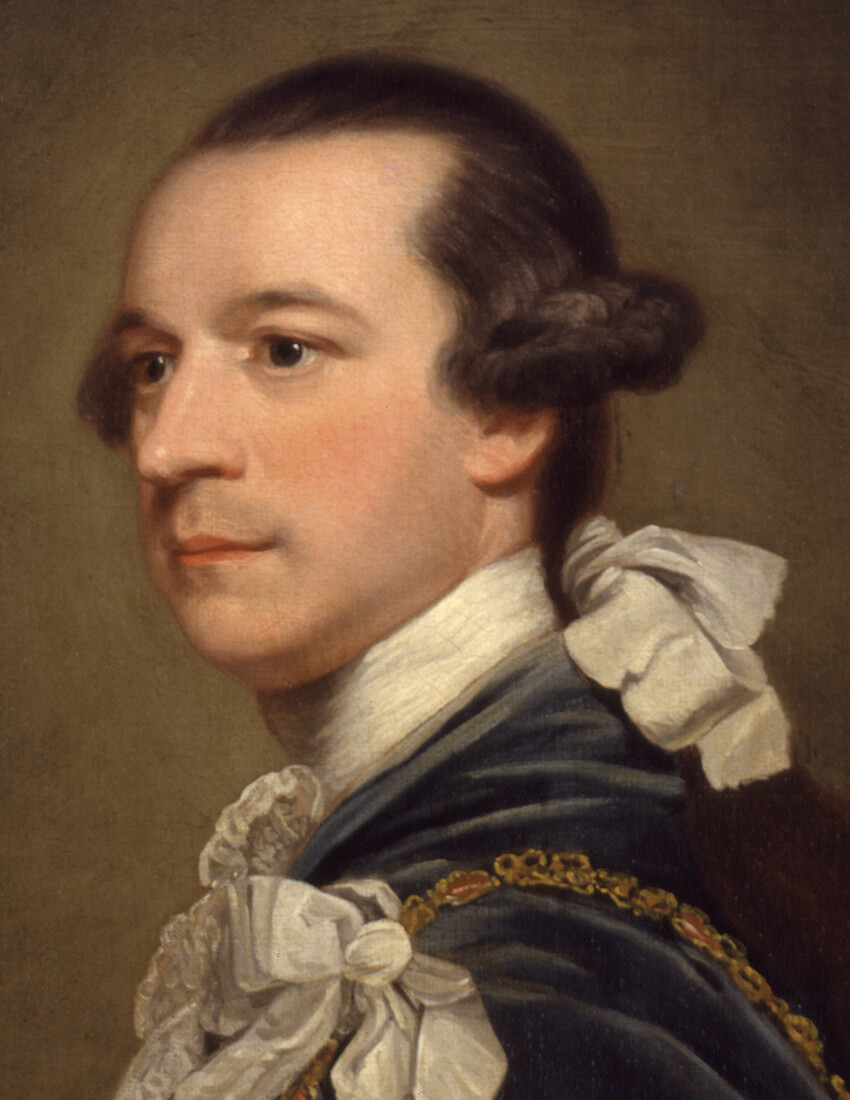
The Marquess of Rockingham: Twice Prime Minister of Great Britain, and the dear friend whose name Miller gave to a tune that would outlast them both.
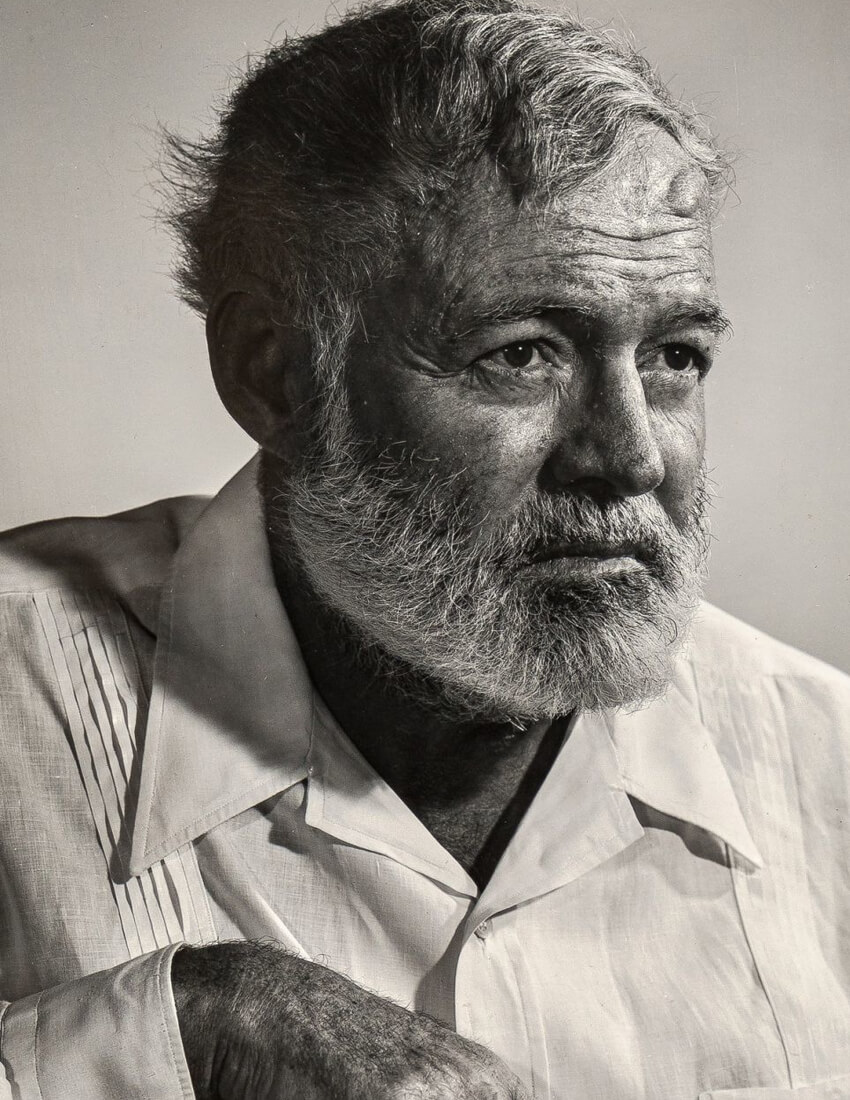
Ernest Hemingway: One of the greatest novelists of the 20th century, and Edward Miller’s great-great-great grandson.
Somewhere around 1750, a teenage boy in Norwich, England, put down his paving tools, looked at the road stretching before him, and decided it was not his road to walk. Edward Miller was the son of a pavior, a man who laid paving stones for a living, and he was expected to do the same. The family trade was honest work, and Edward had been formally apprenticed to learn it. But Edward had a gift that had nothing to do with bricks and mortar. He could play the German flute with a skill that far exceeded his years, and the thought of spending his life on his knees laying stones when he could be on his feet making music was more than he could bear. So Edward did what few teenagers in 18th-century England had the courage to do. He ran away from home.
It was a bold move for a working-class boy with no connections and no money. But Edward had something better: talent and determination. He made his way to King’s Lynn in Norfolk, where he sought out a man named Charles Burney, the church organist there. Burney would go on to become the most prominent music historian of his era, but at the time, he was simply a gifted musician willing to take on a promising student. Burney recognized something special in the runaway pavior’s son and agreed to teach him. The education was rigorous, covering not just performance but composition, harmony, and the theoretical foundations of music.
Through Burney’s connections, Edward was introduced to none other than George Frideric Handel himself. The master of the oratorio, the composer of Messiah, the most celebrated musician in all of England. And for a time, young Edward Miller served as a flautist in Handel’s orchestra. Consider the journey: from apprentice pavior to the orchestra of the greatest composer alive. If God ever needed to demonstrate that He does not confine a person to the life others have chosen for them, Edward Miller’s early years are proof enough!
By the age of seventeen, Edward had already published his first work, “Six Solos for the German Flute.” The runaway was making a name for himself. It would take several more decades before that name was attached to ROCKINGHAM, the hymn tune that would become his greatest and most lasting gift to the church. But the road to it began here, in the courage of a boy who refused to lay paving stones.
In 1756, on the recommendation of James Nares, organist and composer to the Chapel Royal, the twenty-one-year-old Miller was appointed organist of St. George’s Church in Doncaster. The church had recently received a new organ, and the position carried a yearly salary of £30. It was a modest post in a modest town, but Edward embraced it fully. He would hold this position for an extraordinary fifty-one years, from the day of his appointment until the day he died.
Edward settled into Doncaster with the intent of making it his home. He joined the local militia as a way of integrating into the community, and he became part of a circle of music makers who gathered at Netherhall, the house of Robert Copley. On February 15, 1763, Edward married Elizabeth Lee, the daughter of a local barber and wig-maker. The couple moved into St. George’s House on Church Hill, a home that had belonged to Elizabeth’s father. Behind the house, a garden sloped gently down to the River Cheswold. It was a good life, a settled life, the kind of life that the runaway boy from Norwich had likely never imagined for himself.
If there is one thing that becomes clear when studying Edward Miller’s life, it is that the man never sat still! His organist’s salary of £30 a year was hardly enough to support a growing family, so Edward supplemented his income through an impressive variety of ventures. He gave pianoforte and harpsichord lessons. He played flute solos on local concert platforms. He conducted concerts and instructed the Corporation “Waites” band on oboe and bassoon.
During Doncaster’s race week, when the gentry descended on the town for horse racing, Edward organized social musical events at the parish church and the Mansion House. These events were designed to entertain those who were not inclined to morning hunting before the races. A notable race-week concert in 1768 featured Handel’s oratorio Judas Maccabaeus, performed one morning by eighty vocalists and instrumentalists, followed by a performance of Messiah the next day. Tickets were sold at seven shillings and sixpence.
But music was not Edward’s only source of income. He was something of an entrepreneur, with business interests that ranged far beyond the organ bench. He farmed leased land along the River Torne and on Potteric Carr. He built Carr Grange on Carr House Road, which he later sold. He managed properties in Fishergate, operated clay pipe-making premises next to Church House, and ran sandpits in Wheatley. Organist, teacher, concert promoter, farmer, property manager, pipe-maker: Edward Miller wore many hats, and wore them all with energy.
In 1771, he published “The Institutes of Music; or An Easy Introduction to the Art of Playing on the Harpsichord.” The book was a remarkable success, running through sixteen editions over the years. It was later described by some as “the first attempt to reduce the study of music to something like rule in the nature of grammar.” And in 1786, Cambridge University awarded Edward a doctorate in music. The runaway apprentice pavior was now Dr. Miller.
Among the musicians who passed through Edward’s circle in Doncaster, one stands out for reasons that have nothing to do with music. Friedrich Wilhelm Herschel was a young German musician who, for a time, stayed at what Edward modestly called his “humble mansion” in Doncaster. The two men shared a love of music and participated together in the music-making gatherings at Netherhall.
Herschel went on to become church organist at Halifax and then at Bath’s Octagon Chapel. But music, it turned out, was only part of Herschel’s story. He had eclectic interests in astronomy and optics, and those interests led him to far greater fame than any concert platform could have provided. In 1781, Herschel discovered the planet Uranus. By 1782, he was Court Astronomer. He designed groundbreaking telescopes, and in 1816, he was knighted, becoming Sir William Herschel.
That a future knight and discoverer of planets once shared lodgings with a provincial church organist is one of the most delightful coincidences in the history of both science and music. Neither man could have imagined where their respective callings would lead when they sat together making music in the parlor of a Doncaster home.
For all his professional success, Edward Miller’s personal life was marked by a grief that few could bear. In the ten years of his marriage to Elizabeth, she bore ten children: three boys and seven girls. The infant and childhood mortality of the era took a devastating toll on the family. Of all ten children, most did not survive past early childhood.
Elizabeth herself died in 1773 at approximately twenty-eight years of age, leaving Edward a single parent with his surviving children. He was only in his late thirties, yet he had already buried most of his family.
Perhaps the most heartbreaking episode came in 1786. Edward’s son Thomas, one of the few children who had survived into his teenage years, was serving as a midshipman aboard the East India Company’s vessel Halsewell. He was only about fifteen years old. On January 6, 1786, the Halsewell was wrecked in a catastrophic storm off the coast of Dorset, driven onto the rocks near Seacombe on the Isle of Purbeck. Of over 240 crew and passengers, approximately 170 perished. Thomas was among them.
The disaster was a national sensation. King George III visited the wreck site. Charles Dickens later wrote a story inspired by the tragedy. The wreck of the Halsewell was one of the most famous maritime disasters of the 18th century, comparable in its public impact to the later sinking of the Titanic.
A poignant detail survives from Thomas’s final visit home. Shortly before his last voyage, the boy had carved his initials into the glass of a bedroom window at Church Hill. According to local accounts, those scratched initials were still visible generations later, a haunting memorial to a fifteen-year-old boy lost at sea.
How does a man carry on after such loss? Edward Miller carried on the only way he knew how: through work, through music, and through the faith that had anchored his life from the beginning.
Edward’s efforts to establish himself in Doncaster society bore fruit in the form of friendships with some remarkably powerful men. Chief among them was Charles Watson-Wentworth, the 2nd Marquess of Rockingham. Rockingham was the leader of the Whig party and served twice as Prime Minister of Great Britain. He was also the instigator of the St. Leger horse race. Edward had come to know the Marquess through the local militia that Rockingham commanded.
Despite the friendship, it never resulted in the prestigious Court musical appointment that Edward had hoped for. The Marquess died in 1782, and Edward honored him with a published tribute titled “The Tears of Yorkshire on the Death of the Most Noble the Marquis of Rockingham.” Though the Court appointment never came, the friendship would be immortalized in a different and far more lasting way.
Another important patron was Lord Viscount Galway of Serlby Hall in north Nottinghamshire. Both friendships would live on through the two hymn tunes that bear their names: ROCKINGHAM and GALWAY.
In 1790, Edward published “The Psalms of David for the Use of Parish Churches,” a significant collection co-published with Rev. George May Drummond, Vicar of Doncaster. The collection attracted over 5,000 subscribers, a remarkable number that spoke to Edward’s national reach.
Within this collection was a tune that Edward had adapted from an earlier anonymous melody called TUNBRIDGE. The original tune had appeared in publications associated with the Countess of Huntingdon’s Chapels in Bath and Bristol, sometime around 1774 to 1778. Edward saw potential in the melody and made several significant changes to reshape it into something new. He was honest about the tune’s origins, annotating each appearance with the inscription: “Part of the melody taken from a hymn tune.” In his personal copy, he wrote beneath the source melody: “Would make a good long Metre.”
Edward named his adaptation ROCKINGHAM, in memory of his departed friend and patron, the Marquess. The tune appeared seven times throughout the volume, set to a variety of psalm texts from the Tate and Brady New Version of the Psalms. It was a fine tune, a stately and meditative melody, but at the time of its publication, no one could have predicted the extraordinary life it would go on to live.
Edward’s interests extended beyond music. In 1804, he published “The History and Antiquities of Doncaster and its Vicinity, with Anecdotes of Eminent Men,” a substantial 400-page history of his adopted town. Edward had visited every church and village he wrote about, and he corresponded extensively with local scholars and clergy to gather material.
The book was a labor of love. By the time it was published, Edward had lived in Doncaster for nearly fifty years. The runaway from Norwich had become one of the town’s most devoted citizens, and his history of Doncaster remains a valuable resource for local historians to this day.
Edward did not remarry for over two decades after Elizabeth’s death. However, he fathered two sons with Elizabeth Brailsford, a young woman from Doncaster. Their children were Isaac Brailsford and Edward Brailsford. Edward never married Elizabeth Brailsford, but notably, Isaac went on to succeed his father as organist at St. George’s Church, continuing the musical legacy that Edward had built over half a century.
On December 29, 1796, at the age of sixty-one, Edward married Margaret Lloyd Edwards at Tuxford, Nottinghamshire. She would outlive him by over three decades.
Edward’s surviving son from his first marriage, William Edward Miller, inherited his father’s love of music in full measure. William became an accomplished violinist, reportedly acclaimed as “second only to Paganini.” During time spent in India, William received a Cremona violin as a gift from Tippoo Sahib, the Sultan of Mysore. It was a remarkable instrument and a remarkable honor. But William’s life took a dramatic turn around 1794 when, drawn by the singing at Norfolk Street Wesleyan Methodist Church in Sheffield, he experienced a profound religious conversion at a quarterly lovefeast under the influence of Reverend John Moon. Following his conversion, William abandoned the valuable Cremona violin (no record of whatever became of it), a dramatic act of surrender that carried echoes of his father’s own youthful decision to leave one life behind for another. William went on to become a beloved Methodist minister and reportedly served as the first organist at St. James Chapel in Sheffield.
On the evening of Saturday, September 12, 1807, Edward Miller died at the age of seventy-one, after a two-month illness. He had served as organist of St. George’s Church for fifty-one years without interruption. The Doncaster Gazette praised him as a man of “genius and integrity.”
Sadly, Edward’s family memorial in St. George’s Church was destroyed in the Great Church Fire of 1853, which devastated the building. The organ that he and his son Isaac had played for over ninety combined years was lost in the blaze.
Perhaps the greatest irony of Edward Miller’s legacy is that the achievement for which he is most remembered is one he never witnessed. Edward published ROCKINGHAM as a setting for metrical psalms in 1790. He never paired it with the hymn text for which it would become famous.
The text of “When I Survey the Wondrous Cross” was written by Isaac Watts in 1707, decades before Edward even adapted the tune. The earliest known pairing of ROCKINGHAM with Watts’s beloved passion hymn did not appear until around 1833, in Godding’s “The Parochial Psalmodist,” a full twenty-six years after Edward’s death. The pairing that cemented the tune’s permanent place in hymnody came through Hymns Ancient and Modern in 1861.
From that point forward, ROCKINGHAM and “When I Survey the Wondrous Cross” became inseparable in British worship.
When I survey the wondrous cross
On which the Prince of glory died,
My richest gain I count but loss,
And pour contempt on all my pride.
In the United States, Watts’s text is more commonly sung to HAMBURG, an adaptation by Lowell Mason of a Gregorian chant melody. But across Great Britain, Canada, and the Commonwealth, ROCKINGHAM remains the standard and beloved setting. For many years, the BBC has used “When I Survey the Wondrous Cross” sung to ROCKINGHAM to introduce its 7 a.m. broadcast on Good Friday, a tradition that speaks to the tune’s deep association with the most solemn moments of Christian worship.
Edward Miller could not have foreseen any of this. He could not have known that his adaptation of an anonymous melody would become the musical vehicle through which millions of Christians would contemplate the cross. He simply saw a tune, recognized its potential, reshaped it with the skill of a lifetime spent in music, named it after a dear friend, and moved on to his next project. God did the rest.
The reach of Edward Miller’s legacy extends in directions that no one could have predicted. Among them is this remarkable fact: Ernest Hemingway, one of the most celebrated novelists of the 20th century, was Edward Miller’s great, great, great grandson.
The connection runs through Hemingway’s maternal line. His mother, Grace Hall Hemingway, was deeply proud of her musical ancestry. In 1896, while touring England with her father, Grace met several Miller relatives and saw a portrait of William Edward Miller, Edward’s son, depicted lounging by his piano, surrounded by books and sheet music. Grace was so taken with the portrait that in 1903, she commissioned a life-size copy to hang in her music room at North Kenilworth Avenue in Oak Park, Illinois. During his childhood, young Ernest would have seen that portrait staring down at him during music lessons, boxing sessions, and parties in the Hemingway music room. No doubt his ambitious mother frequently reminded him of his illustrious Miller musical heritage.
Hemingway himself came across his ancestor’s story later in life. In December 1937, while in Madrid during the Spanish Civil War, he received a newspaper clipping from the editor of the local paper in Doncaster about a memorial service held in honor of Dr. Edward Miller on October 24, 1937. Hemingway later discussed the clipping with his mother and remembered that it concerned “a legend that [Miller] had written a very famous hymn (which it seemed he had been credited with writing but had not written).” That description, imprecise as it was, captures the ROCKINGHAM story perfectly. Edward never claimed the tune as entirely his own, and the hymn pairing that made it famous came long after his death.
The thread is remarkable to trace. A pavior’s son runs away from home in 18th-century Norwich, eventually adapts a melody that becomes one of the most cherished in Christian worship, and two centuries later, his great, great, great grandson is one of the most famous writers on earth. God’s plans have a way of stretching far beyond what any of us can see.
Edward Miller was born into a life of paving stones, and he chose a different path. That single act of youthful courage set in motion a life of extraordinary breadth: flautist in Handel’s orchestra, organist for over half a century, entrepreneur, historian, friend to prime ministers and planet-discoverers, and father to children who carried his musical legacy forward in ways both beautiful and heartbreaking.
But of all his many accomplishments, the one that endures most brightly is a tune he adapted and named after a friend. ROCKINGHAM was not even wholly his own creation, and the hymn pairing that made it immortal did not happen until decades after his death. Yet every Good Friday, when congregations across Great Britain and the Commonwealth rise to sing “When I Survey the Wondrous Cross,” it is Edward Miller’s melody that carries those sacred words.
The boy who ran away from paving stones ended up laying a different kind of foundation: a musical one that has endured for over two centuries. And that, in the end, is what happens when God takes a life surrendered to a calling and uses it for purposes far greater than any of us can imagine.